
Criminal Cases in Morgan County Courts
Morgan County does not place every criminal matter with one clerk. Superior Court, part of the Ocmulgee Judicial Circuit, is the felony and general-jurisdiction anchor. The Clerk of Superior and Juvenile Court keeps its filed pleadings, dockets, judgments, and sentencing orders. Magistrate Court maintains records within its own limited jurisdiction. Probate Court publishes jurisdiction over traffic and game-and-fish cases. Madison Municipal Court separately holds city citations and its original sentencing orders.
The court named on the citation, bond paper, accusation, or indictment controls where the file lives. A sheriff booking charge is an intake label, not a final court assignment. When Morgan County paperwork is unclear, give the charge, date, and number to the clerk and ask which court owns the docket before seeking copies.
Municipal and county court records also should not be blended. Madison's JusticeONE page is designed to pay eligible citations. It does not replace the Municipal Clerk's original citation file or sentencing order, and it does not search every Morgan County criminal case. A city matter may require the Madison clerk, while a felony from the same incident proceeds through Superior Court.
Morgan County Felony File Counter
The Superior and Juvenile Court clerk is at 384 Hancock Street in Madison. The office is open Monday through Friday, 9:00 a.m. to 5:00 p.m.; call 706-342-3605 or email info@morganclerkofcourt.com. Ask for the final disposition and sentencing order when the outcome matters. That focused wording is more useful than a broad request for every paper in a Morgan County criminal case.
The official clerk homepage shows the office and its case-search route.
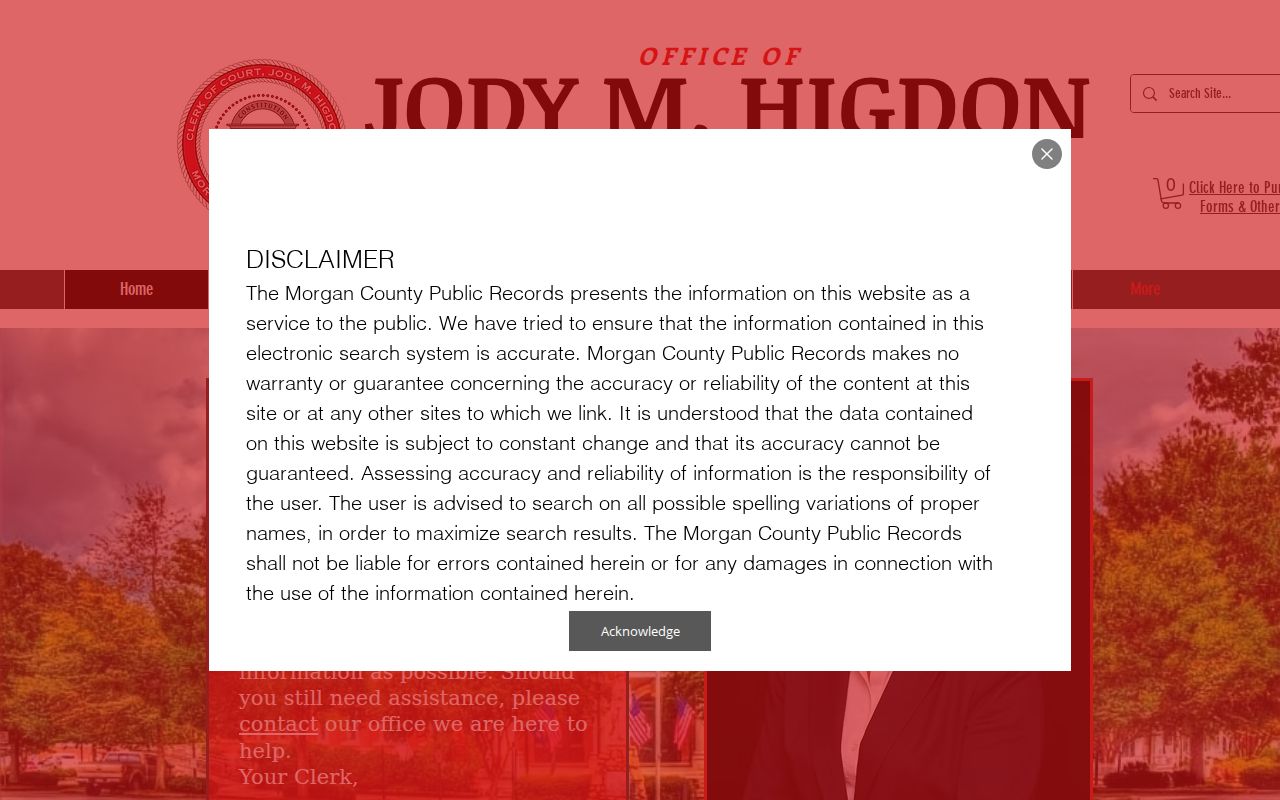
This clerk remains the direct fallback when an online index omits an older entry or fails to display the document needed.
How to Search Case Records
The official Morgan County web case endpoint is a sensible first attempt, but its interface did not render during the research inspection. No search labels, date coverage, or remote document set can be promised. Use an exact case number if known. With only a name, add an approximate filing year and ask the clerk to distinguish people with similar names.
- Open the clerk-hosted case endpoint and try the exact Morgan County case number from court papers.
- If it does not render, call the clerk and give the party name, approximate year, and charge or court shown on the paperwork.
- Confirm whether Superior, Magistrate, Probate, or Madison Municipal Court holds the file.
- Ask for the docket, judgment or disposition, and sentencing order rather than relying on a charge line.
- Tell the clerk whether an ordinary, certified, or inspected copy is needed and confirm the current fee first.
| Field Label | Type | Required | Notes |
|---|---|---|---|
| Case number | Exact identifier | Best option | Use the full number and year from filed papers. |
| Party name | Name | Fallback | Supply spelling variants when calling the clerk. |
| Filing year | Year | Helpful | Narrows a common-name request. |
| Charge or court | Description | Helpful | Routes the inquiry to the right Morgan County clerk. |
| Disposition sought | Document request | For copies | Specify judgment and sentence if those are the goal. |
These are documented fallback identifiers, not claimed labels from the portal. The live interface could not be inventoried, so the staffed clerk channel is essential.
Remote access and legal access are not the same. A public document may exist even when no image is posted. Ask whether the Morgan County docket can be inspected at the counter, whether the desired order can be sent as a copy, and whether certification is available. If the clerk cannot locate the matter, recheck the court name on the original paperwork before broadening the request.
Morgan Citation Payment Limits
A citation payment page answers a narrower question than a Morgan County criminal case search. Madison Municipal Court uses JusticeONE for eligible citation payments, and the payment route requires a citation number. That tool may help a person deal with an amount due on a city citation, but it is not a countywide docket. It does not search Superior, Magistrate, or Probate Court files, and it should not be used to decide whether a filed charge has been dismissed or resolved.
Start with the issuing court shown on the citation. Madison Municipal Court keeps its original citations, sentencing orders, reports or test results, payment records, and sentence conditions. Its clerk works at the Police Station at 160 North Main Street, while court convenes in the lower courtroom at 149 East Jefferson Street. That split makes the court name and record type more useful than the building where a hearing took place.
If the goal is an outcome, request the disposition or sentencing order from the clerk that owns the case. A payment confirmation proves only that a payment transaction occurred. It does not replace a judgment, show the full docket, or establish the status of a related Morgan County charge in another court.
Morgan County Court Jurisdiction Split
Jurisdiction explains why a single name search can miss a Morgan County case. Felony pleadings and judgments belong with Superior Court. Probate Court publishes traffic and game-and-fish work. Magistrate Court has a separate counter at 149 East Jefferson Street and can confirm whether a charge number falls within its files. Madison Municipal Court keeps city citation records at a different administrative counter.
The Superior Court officials page shows the circuit-level setting for Morgan County criminal cases.
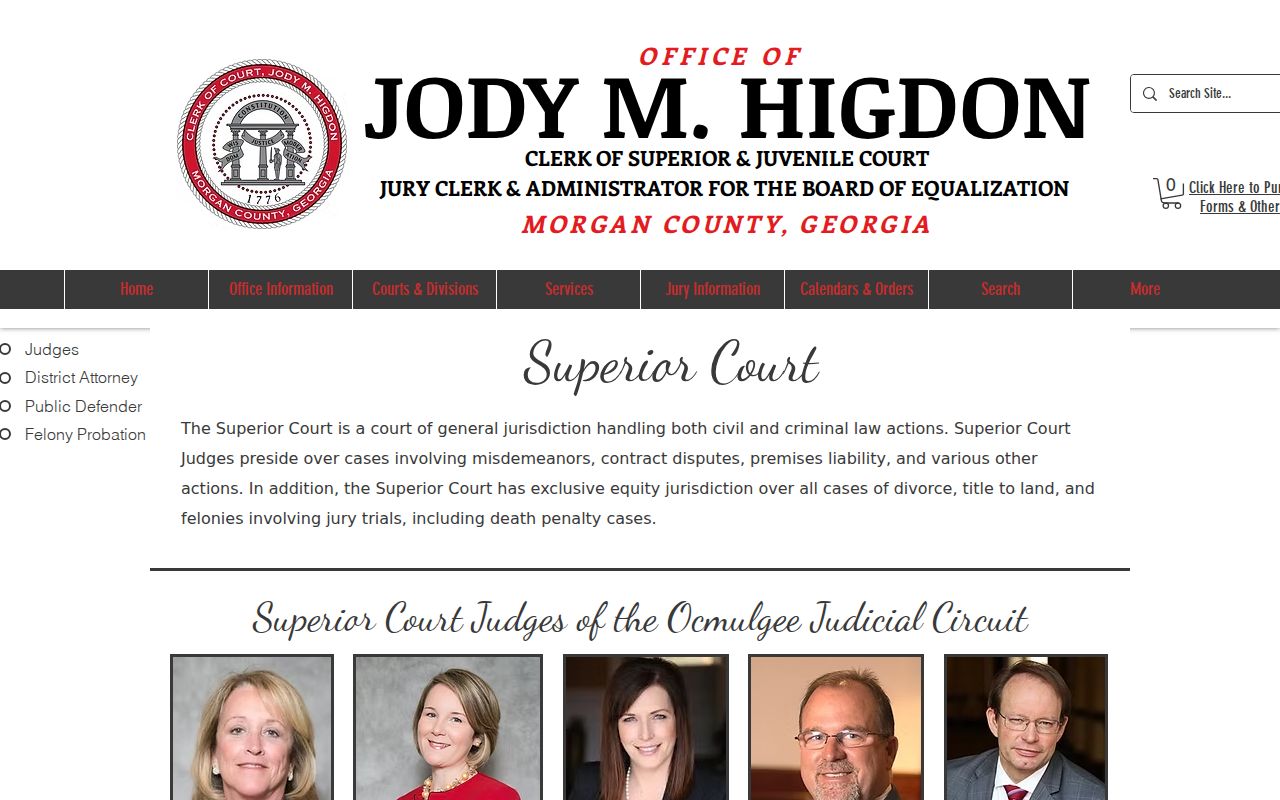
Five Ocmulgee Circuit judges may serve the circuit, while one Morgan County clerk preserves the county file and provides local access.
Morgan County Case File Contents
A Morgan County court file traces what prosecutors filed and what the judge did. It can resolve questions that an arrest entry cannot: whether a charge was reduced, dismissed, tried, or resolved by plea; whether the court entered judgment; and what sentence or conditions followed. Older or courthouse-only material may require a call or counter visit.
| Case Number & Court | Identifies the Morgan County custodian and the filed matter. |
|---|---|
| Charging Document | Shows the accusation, indictment, citation, or other charge as filed. |
| Docket Entries | Lists filings, hearings, motions, and orders in date order. |
| Hearing Dates | Records scheduled and completed court events. |
| Disposition & Judgment | Shows dismissal, plea, trial outcome, or other final action. |
| Sentence & Conditions | States confinement, supervision, fines, or court-ordered terms when public. |
GCIC may later connect the court disposition to the arrest cycle through an Offender Tracking Number, or OTN. The filed judgment remains the strongest source for the result.
A docket entry is an index of activity, not always the full text of the item it names. If an entry says an order was filed but the image is unavailable, request that dated order from the Morgan County clerk. A certified copy bears the clerk's formal certification; an ordinary copy may be enough for personal review. State the intended format to avoid paying for a service that is not needed.
Morgan County Limited Court Counters
For Magistrate Court, call 706-342-3088 or visit 149 East Jefferson Street during its published weekday hours. Ask whether the charge or case number belongs there and what public docket or order is available. This is a court-file inquiry, not a request to the Sheriff for a booking history.
The official Magistrate Court page identifies its Morgan County counter.
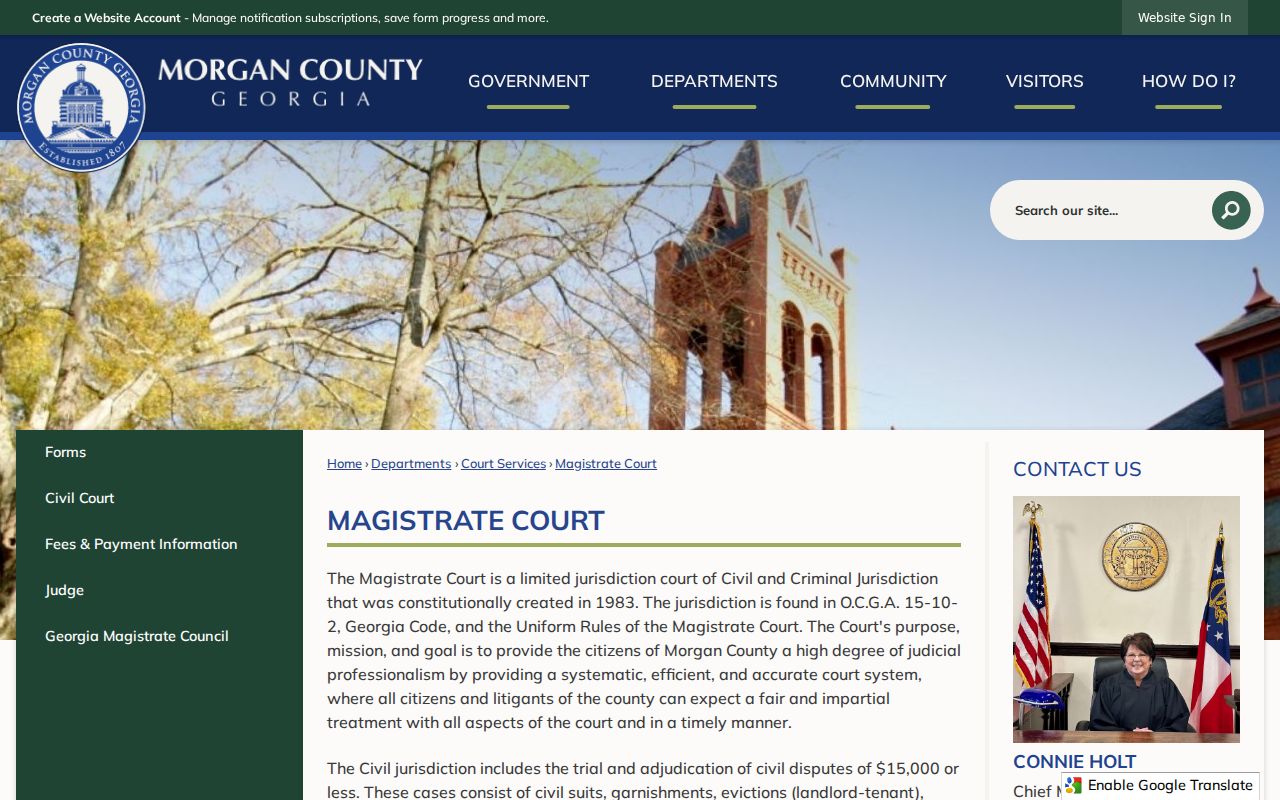
That separate contact prevents a limited-jurisdiction file from being mistaken for a missing Superior Court record.
Probate Court uses the same street address but a distinct office and phone, 706-343-6500. Its published traffic and game-and-fish role makes it a likely custodian for those citations.
The Probate Court page provides the official contact point.
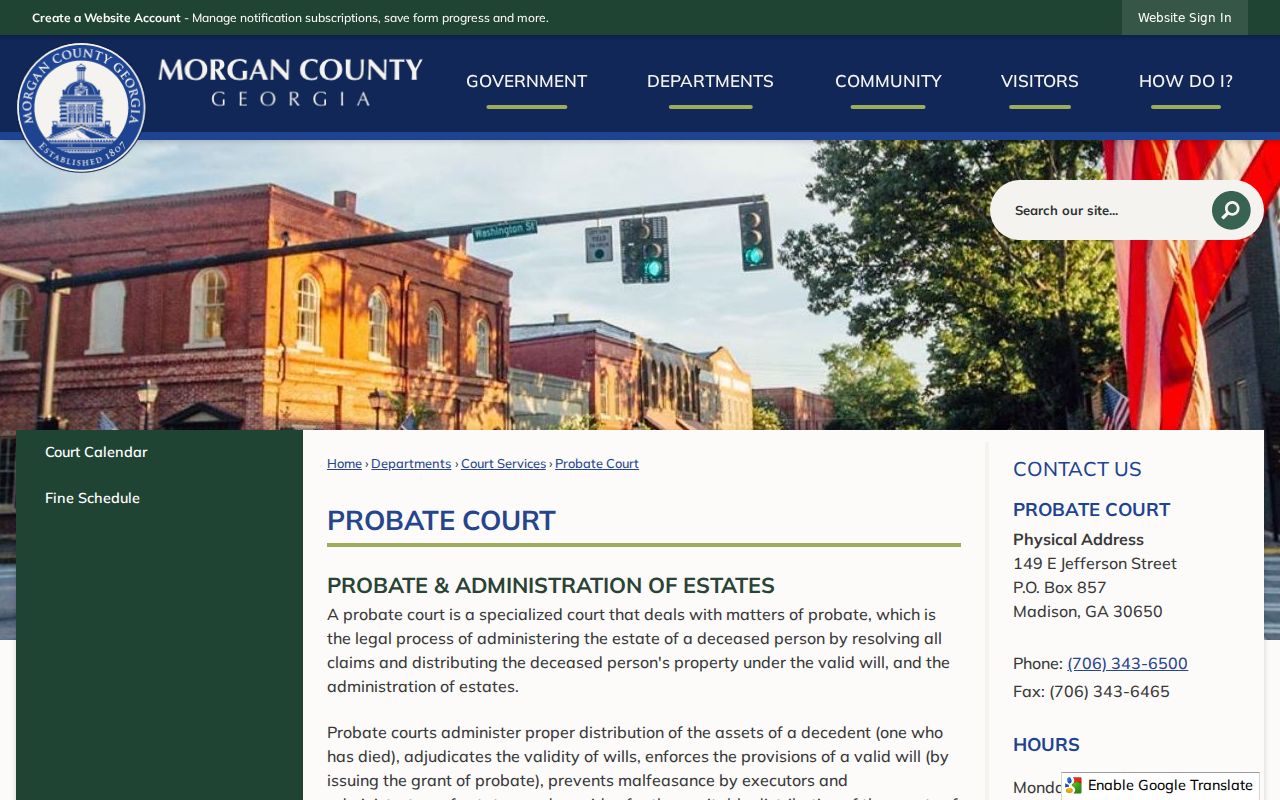
A citation payment or booking reference may help identify the matter, but the Probate Court file supplies its court disposition.
Morgan County Criminal Case Stages
A Morgan County case file grows as agencies add distinct records. A prosecutor first files or pursues the formal charge. The court then schedules arraignment, where the charge and plea are addressed. Pretrial motions and discovery may follow. A plea or trial produces the disposition, and sentencing sets the court-ordered result. No official local source supports a fixed duration for each stage, so a docket must be read by date.
Case flow: Charges Filed › Arraignment › Pretrial › Plea or Trial › Disposition › Sentencing
A true bill is a grand jury indictment. Nolle prosequi means the prosecution formally declined to continue a charge. Neither term should be inferred from a jail release line.
Arraignment does not itself decide guilt. Pretrial entries may show motions, notices, continuances, or discovery-related events. The disposition is the court's resolution of the charge, while the sentence states the consequence after a guilty result. Reading those stages in order keeps a preliminary Morgan County charge from being mistaken for the final judgment.
When Morgan Case Search Fails
An empty screen does not prove that no Morgan County criminal court case exists. The portal may not render, an older file may not be remotely indexed, the name may differ, or the matter may sit with another court. Call the likely clerk with an exact number or a name plus year. If the outcome is the goal, ask for the judgment, disposition, and sentencing order.
Copy and certification charges can change. The clerk's fee page directs readers to the governing schedule or office rather than promising a stale amount. Confirm the format and cost before ordering. For an existing county record outside the clerk's system, the Morgan County open-records form is available, but it does not replace a direct court-file request.
Morgan County Case Access Rules
The Georgia Open Records Act supports access to existing public records, but court access also reflects judicial rules and lawful sealing. Juvenile material, restricted criminal history, sealed records, protected victim information, and sensitive identifiers may be withheld or redacted. A public index can therefore show less than the courthouse file, while a sealed matter may not appear at all.
Georgia agencies generally must respond to an open-records request within three business days, even if lawful production takes longer. The rule requires a response, not the creation of a new report or instant delivery of every file. Narrow Morgan County requests by case number, year, document type, and court. If a record is withheld, ask the custodian to identify the legal basis.